Natural Dyes
Showing 19–24 of 24 results

Munjeet, Ground
Ground dried roots of Rubia cordifolia, also called Indian Madder. A very close cousin to regular Madder.
Use on protein or cellulose fibres. Pre-mordanting recommended. Produces dramatic reds, crimson and coral/salmon. Basically follow a recipe for regular Madder. Use at 50-100% WOF for medium shades.
TO USE: simmer in water below 185°F for 30 minutes. Cool overnight, then repeat simmer and strain. Add more water and enter pre-mordanted fibre. Hold below 158°F for one hour. Higher temperatures produce browns.
Light and washfastness: excellent

Myrobalan, Ground
Ground nuts of a tropical tree, Terminalia chebula.
Use on protein or cellulose fibres. Considered both a mordant and a dye, because of the high tannin content. Yields a light butter-yellow to beige or mushroom. Substantive, no mordant needed. Use at 15-20% WOF as a mordant on cellulose fibres. As a dye, use at 20-30% WOF for medium shades.
TO USE:soak 24 hrs in water to dissolve. Add more water if necessary and enter fibre. Bring to a high simmer for 1 hour. Let fibre cool overnight.
Light and washfastness: good.

Osage Orange, Shavings
Dried shavings from Maclura pomifera, a tree once widely planted in the US and eastern Canada for shetlerbelts. The wood is still used to make archery bows.
Use on protein or cellulose fibres. Pre-mordanting recommended. Strong and fast golden to lemon yellows are produced. Use at 20-50% WOF for medium shades.
TO USE: place shavings in a stocking and soak overnight (or longer) in cold water. Bring to a simmer for 1 hour, cool and remove stocking. Enter premordanted fibre and simmer for 1 hour. Combines well with other dyes such as Logwood. Shavings can be dried and reused.
Light and washfastness: excellent.
Pomegranate, Ground Rind
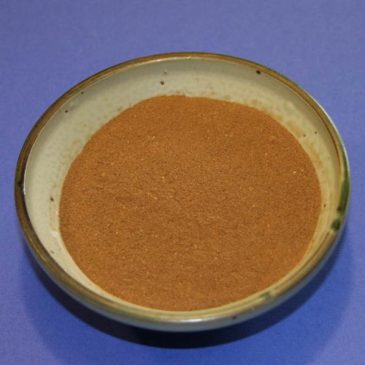
Powdered/ground rind from the rinds of pomegranate fruits, Punica granatum. NOTE: this is NOT EXTRACT. This is the kind to use if you want to try it as a natural mordant.
We list this as a natural dye, but it is sometimes used as a mordant.
Use on protein or cellulose fibres. Yields soft yellows to green-yellows or gold. Substantive but pre-mordanting recommended. Use at 15-20% WOF for medium shades.
TO USE: soak 24 hours in hot water, stirring occasionally, then strain. Place liquid and fibre in dyepot and add more water if necessary. Bring to a high simmer for 1 hour. Let fibre cool in dye liquor for at least one more hour or overnight then wash and rinse.
Light and washfastness: moderate to good.

Sumac Powder
Ground, dried leaves of a small tree native to the Mediterranean, Rhus coriaria. This has been used for tanning leather for centuries, producing a yellowish-green colour. It was once widely used in the woolen trade to produce shades of brown through tan to yellow-brown and olive and is sometimes called Tanner's Sumac.
Used mainly on protein fibres but worth experimenting with on cotton and other plant fibres. We can't find much information, but suggesting trying this at 20-30% WOF for medium shades, as a starting point..
TO USE: soak in warm water overnight. Simmer in liquid 30-60 minutes at 170-190°F. Cool, strain, add more water if necessary then simmer premordanted fibre for 30-60 minutes at 170-190°F. Lower temperatures (below 160°F) may help the yellow pigments to shine through, and keep down the brown tones.
Light and washfastness: probably good to excellent with a mordant.

Weld, Dried Chopped
Dried and chopped tops from Reseda luteola.
Use on protein or cellulose fibres. An ancient source of excellent bright yellows. Pre-mordanting recommended. Alum/c.o.t. mordant gives good results. Use at 30-50% WOF for medium shades.
TO USE: soak in water overnight, then simmer mixture at 160-175°F for 1 hour. Cool and strain. Add more water if needed and enter pre-mordanted fibre. Hold at a 160-175°F for one hour. The brightest yellows develop at these cool temperatures.
Light & washfastness: very good.