Back to Exotic
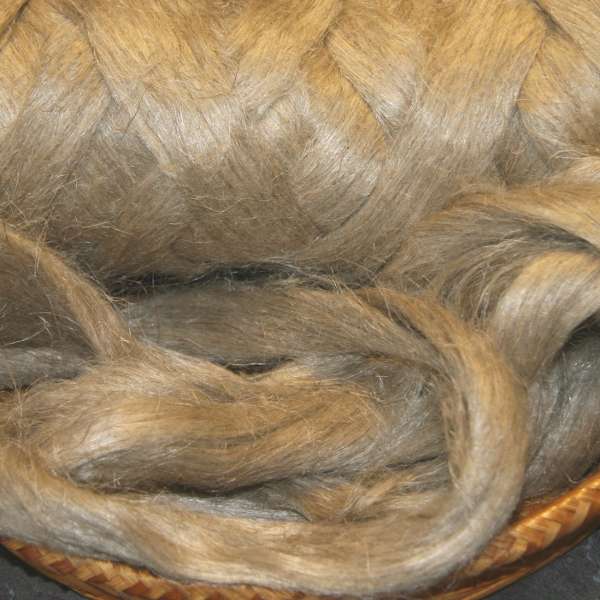
Flax Top – Natural Brown
$8.00 – $61.74
100% Flax
Natural coloured (not bleached) flax top which we get from Italy but it probably originates somewhere in Eastern Europe. Staple length about 5 to 6 inches, and a nice fine-quality fibre. This is the same flax we offer as dyed colourways, before it’s been bleached and then dyed.
PRODUCT of ITALY
Related products

Tencel (Top)
100% Lyocell.
Very clean combed top, in "natural" white. Staple length is about 4 inches. Technically this manmade fibre is called lyocell. It's in the rayon family and made from wood pulp. Tencel® has been embraced by spinners and knitters alike, because it is fantastically soft with a terrific sheen and wonderful drape. Excellent for lighter summerwear as it absorbs moisture well.
Tencel® can be spun alone or blended with other fibres. An intriguing choice for those that can't wear wool. <
Since this is a plant or cellulose fibre dyers must use fibre reactive dyes. Natural dyers can resort to techniques used on cotton, such as alum-tannin premordanting, or Aluminum acetate. We don't know how Tencel® responds in an indigo vat.
That being said, when blended with protein fibres, acid dyes will leave the Tencel® alone during dyeing, which makes for some wonderful streaky or heathered effects, depending on how well the fibres are blended.

Flax Top – Cyclamen
100% Flax (linen) fibre.
Clear, bright cyclamen pink.
PRODUCT of ITALY
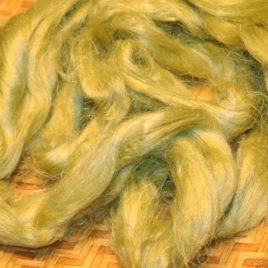
Flax Top – Sage
100% Flax (linen) fibre.
A pastel sage green that's easy to get along with.
PRODUCT of ITALY

Flax Top – Sun
100% Flax (linen) fibre.
Dramatic, bright and punchy yellow leaning towards the acid end of the spectrum.
PRODUCT of ITALY