
Back to Mordants and Additives

Soda ash
$4.40 – $8.00
Used with fibre reactive dyes as a colour FIXATIVE. Soda ash raises the pH and allows the dye to bond with the fibre. Generally used only with cellulose (plant) fibres such as cotton or flax. Also known as washing soda or sal soda, though this is a more pure form that the washing soda sold in supermarkets.
Also sometimes used in natural dyeing to create more alkaline conditions, and thus altering the colour with certain plants. Extensively used for indigo vat dyeing.
TO USE: Follow dye manufacturer’s directions for amounts and timing.
Dispose of spent dyebath in the usual way, most likely down the drain.
CAUTION: Wear a mask when handling powders. Wear gloves, can be a skin irritant.
Related products

Copper sulphate
Used as a MORDANT in natural dyeing, which allows the plant pigments to bond with the fibres.
Copper tends to take the dyed yarn colours towards the brown and green ends of the spectrum. A natural dye that comes out bright yellow with an Alum mordant will look very different with copper.
Used mainly on protein fibres such as wool, alpaca, silk. Although we love to use copper as a premordant, many dyers simply use it after dyeing to push the colours a different direction. To do this, add only 25% by weight of the usual premordanting amounts. Dissolve in hot water. Remove fibre from the dyebath, stir in the copper solution, re-enter the fibre and heat for another 15 minutes. Cool and rinse as usual.
TO USE: weigh the dry fibre. Calculate mordant required for 2% WOF (weight of fibre) and white vinegar at 40ml per 100g fibre. Weigh copper and dissolve in hot water. Fill pot with sufficient water for the fibre to move, add copper, vinegar and stir. Enter fibre. Bring to 180-200 deg F and hold 1 hour. Stir yarns frequently. Cool overnight, then wash well. Dye fibre immediately or dry for later use. These directions that include vinegar are recommended by Jenny Dean in her various natural dye books. Older recipes tend to use 8% copper sulphate all by itself, as a premordant.
Spent mordant solution is best disposed of on the ground, such as a gravel driveway. Keep well away from tree roots and anywhere that may drain to a pond or water feature, since copper sulphate is toxic to plants, fish and other aquatic life.
CAUTION: wear a mask when handling powders. Wear gloves when using copper, particularly when rinsing or handling wet yarns as can be absorbed by the skin. BEST DONE OUTDOORS or with very good ventilation. Avoid breathing fumes.
Glauber’s salt
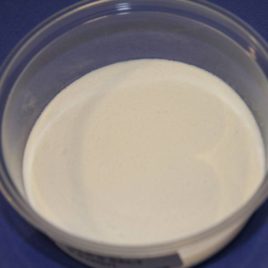
Sodium sulphate. Used as a LEVELLER in both synthetic and natural dyeing.
Glauber's salt slows down the colour uptake of the dye, encouraging more even and level strike. This is particularly useful when dyeing soft pastel shades.
TO USE: Calculate amount required for 10 to 50% WOF (weight of fibre), lower amounts for softer shades, higher amounts for deeper colours. Dissolve in hot water and add in stages during dyeing, as the bath temperature rises but before dye strikes.
Dispose of spent dyebath in your usual way. Down the drain is fine.
CAUTION: wear a mask when handling powders.

Tin Mordant
Used as a MORDANT in natural dyeing, which allows the plant pigments to bond with the fibres.
Tin (Stannous chloride) brightens colours and really makes them "pop". However, it is one of the trickier mordants to use, and rather expensive. Some dyers prefer to premordant with tin, while many simply add "a pinch" at the end of the dye process, and heat the fibre for another fifteen minutes or so, cool and then rinse as usual. The amount recommended for this is only 25% of the usual premordanting amounts, below.
Used mainly on protein fibres such as wool, alpaca, silk. Tin can make fibre feel harsh and brittle, so do not exceed the recommended amounts. Yarns can also easily scorch during tin premordanting. Do not pack the pot too full of fibre! An upturned rack, marbles or stones can help keep yarns off the bottom of your pot.
TO USE: Weigh fibre. Calculate mordant required for .5 to 2% WOF (weight of fibre). Weigh tin and dissolve in hot water. Fill pot with sufficient water for the fibre to move, add tin and stir. Enter fibre. Bring to 180-200°F and hold 1 hour. Stir yarns frequently. Cool, remove fibre and wash well. Dye immediately or dry for later. Some dyers add cream of tartar at 5-10% WOF with tin.
Spent mordant solution may be safely disposed of by pouring in a gravel driveway or path.
CAUTION: wear a mask when handling powders. Wear gloves when using tin, as it can be absorbed by the skin. BEST DONE OUTDOORS or with very good ventilation. Avoid breathing fumes.
Titanium oxalate
Used as a MORDANT in natural dyeing, which allows the plant pigments to bond with the fibres.
Titanium is used both on protein and cellulose fibres, giving vibrant orange and gold tones when dyes contain tannins. As a mordant, this is relatively new and not much information abounds in books or even online. It may be the closest thing now available to replace chrome, which nobody much uses any longer.
TO USE: weigh the dry fibre or yarn. Calculate mordant required for 8 to 15% WOF (weight of fibre). Dissolve in hot water. Fill pot with sufficient water for the fibre to move, add titanium and stir. Enter fibre. Bring to 180-200 degrees F and hold 1 hour. Stir yarns frequently. Cool, remove fibre and wash well. Dye immediately or dry for later.
Some interesting results are being produced doing Eco-Printing on fabric, using Titanium as a mordant.
We cannot seem to find much information on safe disposal of a Titanium mordant bath. Nothing we've found indicates it to be particularly toxic or harmful to plumbing or sewer systems, but to be on the safe side it may be best to dispose of this outdoors on a gravel driveway or similar place.
CAUTION: wear a mask when handling powders. Wear gloves when rinsing or handling wet yarns. BEST DONE OUTDOORS or with very good ventilation. Avoid breathing fumes.