Back to Natural Silk Fibres

Silk Top, Tussah (Bleached)
$8.25 – $63.67
100% silk.
Combed top, bleached but still an ivory-cream colour. Staple length is about 6 to 7 inches. If you plan on using your silk for blending, Tussah silk is nearly always a better value fibre than Cultivated silk.
Silk top is easy to dye, using either acid dyes, fibre reactive dyes, or natural dyes.
For spinning, silk top may be spun all by itself or used for blending with a myriad of other fibres.
Related products

Northern Lights Cotton Candy
Combed 100% wool top/sliver. Space-dyed in soft lemon-yellow, sky blue, lavender and creamy orange.
PRODUCT of BELGIUM

Tencel (Top)
100% Lyocell.
Very clean combed top, in "natural" white. Staple length is about 4 inches. Technically this manmade fibre is called lyocell. It's in the rayon family and made from wood pulp. Tencel® has been embraced by spinners and knitters alike, because it is fantastically soft with a terrific sheen and wonderful drape. Excellent for lighter summerwear as it absorbs moisture well.
Tencel® can be spun alone or blended with other fibres. An intriguing choice for those that can't wear wool. <
Since this is a plant or cellulose fibre dyers must use fibre reactive dyes. Natural dyers can resort to techniques used on cotton, such as alum-tannin premordanting, or Aluminum acetate. We don't know how Tencel® responds in an indigo vat.
That being said, when blended with protein fibres, acid dyes will leave the Tencel® alone during dyeing, which makes for some wonderful streaky or heathered effects, depending on how well the fibres are blended.

Ramie (Top)
100% Ramie.
Very clean combed top, in pencil-roving width. Staple length is 7 to 8 inches. Ramie comes from the stem (bast) fibre of a tropical plant. Typically it is bleached to an almost pure white. Our supply is very fine and soft. Ramie can be spun by itself or used in blends. It's well-suited for lighter summer wear, from against-the-skin to outerwear. An intriguing fibre for those that can't wear wool. <
Since this is a plant or cellulose fibre dyers must use fibre reactive dyes. Natural dyers can resort to techniques used on cotton, such as alum-tannin premordanting, or Aluminum acetate. We don't know how Ramie responds in an indigo vat.
That being said, when blended with protein fibres, acid dyes will leave the ramie alone during dyeing, which makes for some wonderful streaky or heathered effects, depending on how well the fibres are blended.
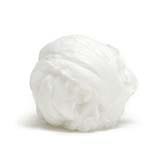
Nylon – Fake Cashmere (Top)
100% Nylon.
Extremely clean combed top, possibly the whitest fibre we carry. Staple length is about 3 to 4 inches which makes this top-notch for blending with almost anything. Few would spin Nylon all by itself, but it has a great reputation for adding strength and durability to other fibres, especially when spinning yarns for socks. This is a fine grade that you won't even notice when blended in at a rate of 20 to 25% or so, by weight.
Surprisingly, Nylon dyes beautifully with acid dyes. It also takes natural dyes well using the usual premordant methods for protein fibres. We love the moniker of "Fake Cashmere", but your fingers will never confuse it from the real thing. It feels more like those puffs they stick inside pill bottles. Maybe it is.