Back to Mordants and Additives

Calcium carbonate (Chalk)
$2.80 – $6.30
Used as a DYE ASSIST or MODIFIER in natural dyeing. Chalk can help to boost the colour uptake on certain dyes, including Madder, Munjeet and Weld, enabling more pigment to bond with the fibres by creating less acidic conditions.
TO USE: calculate amount required for .5% WOF (weight of fibre), which means half a percent. Approximately 1 teaspoon per pound of fibre. Weigh and dissolve in hot water. Add to dyebath before entering fibre. For silk, stir into dyebath after dyeing is complete and taken off the heat, then soak fibre overnight.
Dye solutions containing chalk may be safely disposed of down the drain or just poured outside in the garden.
CAUTION: wear a mask when handling powders.
Related products

Urea (Ammonium nitrate) – 250g
Price per 250g (8.82 oz) container.
CANADIAN SHIPPING ONLY. Limit of 1 per order. We stock Urea in larger packs, including 500g and 1kg sizes available for pickup at the shop only. PLEASE CONTACT US for availability and prices: [email protected]
Due to the potential use of urea as an ingredient in explosives, we wish to handle the distribution of it carefully. Absolutely NO international orders!
We also cannot, by law, supply Urea to those wishing to use it as a nitrogen fertilizer for home garden or agricultural application.
Used mainly with synthetic dyes as an ASSIST, urea helps to open up fibres and allow for better dye penetration, and also keeps the fibre wetter for longer during direct application of dyes. This is a soluble form of urea that dissolves easily in hot water.
TO USE: Follow any of the dyebook directions for cold pad batch dyeing.
Dispose of spent dyebath in the usual way, most likely down the drain.
CAUTION: Should be used with good ventilation. Wear a mask when handling powders. Wear gloves.

Copper sulphate
Used as a MORDANT in natural dyeing, which allows the plant pigments to bond with the fibres.
Copper tends to take the dyed yarn colours towards the brown and green ends of the spectrum. A natural dye that comes out bright yellow with an Alum mordant will look very different with copper.
Used mainly on protein fibres such as wool, alpaca, silk. Although we love to use copper as a premordant, many dyers simply use it after dyeing to push the colours a different direction. To do this, add only 25% by weight of the usual premordanting amounts. Dissolve in hot water. Remove fibre from the dyebath, stir in the copper solution, re-enter the fibre and heat for another 15 minutes. Cool and rinse as usual.
TO USE: weigh the dry fibre. Calculate mordant required for 2% WOF (weight of fibre) and white vinegar at 40ml per 100g fibre. Weigh copper and dissolve in hot water. Fill pot with sufficient water for the fibre to move, add copper, vinegar and stir. Enter fibre. Bring to 180-200 deg F and hold 1 hour. Stir yarns frequently. Cool overnight, then wash well. Dye fibre immediately or dry for later use. These directions that include vinegar are recommended by Jenny Dean in her various natural dye books. Older recipes tend to use 8% copper sulphate all by itself, as a premordant.
Spent mordant solution is best disposed of on the ground, such as a gravel driveway. Keep well away from tree roots and anywhere that may drain to a pond or water feature, since copper sulphate is toxic to plants, fish and other aquatic life.
CAUTION: wear a mask when handling powders. Wear gloves when using copper, particularly when rinsing or handling wet yarns as can be absorbed by the skin. BEST DONE OUTDOORS or with very good ventilation. Avoid breathing fumes.

Oxalic acid
Used occasionally as an ASSIST in natural dyeing. Oxalic acid will alter the shades of cochineal dyebaths, pushing them towards brilliant orange-red.
Also used to help absorption of Tin when premordanting. Dissolve with the tin in hot water at 2% WOF then add to premordanting water, mix and enter fibre.
TO USE: with cochineal baths, use at 2% WOF (weight of fibre). Dissolve first in hot water then mix into dyebath before entering fibre.
Dispose of spent dyebath on the ground.
CAUTION: POISON!!! Wear a mask when handling powders, absolutely wear gloves at every stage with Oxalic acid. MUST BE DONE OUTDOORS: fumes can be an extreme irritant.
Thiourea Dioxide
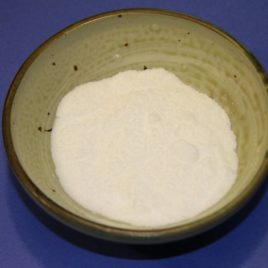
Sometimes called Thiox. Used in the INDIGO VAT dye process, thiox removes oxygen from the vat solution, allowing the indigo to work its magic. Thiox is also a colour remover, and is used for that purpose in discharge dyeing, to create white patterns on a coloured background.
TO USE: Follow the specific indigo vat recipe, for amounts and timing.
Dispose of spent dyebath in the usual way, most likely down the drain.
Thiourea dioxide has a shelf life but it's longer than some things you read might indicate. If the powder has a distinctive yellow look, it has probably oxidized to some degree and may no longer be effective. Store in a cool, dry place out of the light i.e. in a cupboard in the house, not out in the garage.
CAUTION: Should be done OUTDOORS ONLY or with excellent ventilation. Avoid breathing fumes. Wear a mask when handling powders. Wear gloves.